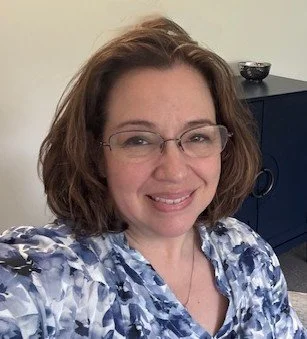
I am a Licensed Clinical Social Worker, licensed to provide therapy in Maryland and Virginia. I provide teletherapy statewide in Maryland and Virginia. I provide therapy in- person in Fairfax, Virginia.
I am a Certified Traumatic Incident Reduction Facilitator (TIRF-C).
I see clients via teleheath statewide in Maryland and Virginia, on an outpatient, weekly or biweekly basis.
I see clients in-person on an outpatient basis in my office in Fairfax, Virginia.
Who I serve
I serve people who pay for therapy via cash, check or credit card.
I see high-functioning, intelligent adult women 35 and up who are managing caregiving responsibilities.
I see women who are managing multiple responsibilities in their lives.
I see women with caregiver stress.
I see women caring for a loved one with dementia.
You know you are a strong person. You have always been curious about life, the world, certain subjects. You may even have been the first in your family to do certain things, like away to college or do a career that was different from what others you knew did. You took pride in this and still do. You value strength and know you are worth something. But how does that fit in with your responsibities? Even if you don’t have kids, you may be a mentor or helper to others along with work, and you are still overwhelmed. You also want to be present for your partner, but that can feel like just one more demand in your life. You may sometimes wish they would all go away so you be done with this and just have some fun or rest. “I’m sick of worrying about other people!” Is a common phrase that runs through your head. But you then feel guilty. You love your family, but you miss doing the things that used to bring you joy and you want your energy back and a bit of the person you used to be. You want to feel good about the future, too.
How I Help
I help women navigate their overwhelm, guilt, and “Imposter Syndrome”. We work to clarify your frustrations and determine what is keeping you stuck in these feelings, as well as when they started. We work on the messages you may have gotten about yourself that may have helped you in the past, but may be keeping you stuck. We work to help you set boundaries and get back in touch with your body, mind, and emotions so that you can regain calm and feel anchored and have energy to live your life as fully as possible.
I work in a person-centered way. I am not here to judge or to tell you what to do; you get enough of that in the world! Our sessions are a bit more structured than a typical talk therapy session. With that structure, you are free to tell me whatever is on your mind, without having to worry about my reaction or opinion. Most people have particular areas of life that are causing them frustration, worry or pain. Often, these areas overlap, especially when we start work. That is ok! As we work, you will begin to disentangle your problems so they become clearer and easier to manage.
We will also develop a “Case Plan” and assess how you are doing periodically. This is NOT a test. It is simply a guidepost to help you with a sense of direction for our work together.
If you have a particularly painful incident or experience that is affecting you, we will also work through that. I will integrate these methods into our work as called for and as you are willing and able. See Extended Sessions and PTSD for more in-depth information.
As needed, I will provide you with resources in the way of practical tools, organizations, support groups, or webinars that will help you with your particular life issues. I have personal and professional experience in navigating the overwhelm that accompanies multiple roles and responsibilities.
My Modalities
I use the Life Stress Reduction (LSR) to help people look at what is causing them stress and reduce that distress and overwhelm. LSR allows you to view the issues that are causing you distress. We create a space for you to unlayer the parts of your issue until you get relief and resolution from that issue.
As needed, I use Mindfulness work and Grounding Techniques to help you self-calm when you are distressed.
I also use Somatic Experiencing and Internal Family Systems (IFS) therapy to reduce distress in the people I work with.
I primarily use Traumatic Incident Reduction (TIR) to bring relief from the symptoms of distressing or traumatic experiences.
Other Approaches
Occasionally I will give consultation on strategies and resources to supplement our work, as stated above.
Who I do not serve
It is important that you get the help you need from the appropriate resource.
I do not take health insurance. I do not serve people who wish to pay for therapy with their health insurance.
I do not serve children or adolescents.
I do not serve people who are in crisis. If you are finding it difficult to cope with your emotions to the point that you think you might harm yourself or someone else, and you do not feel you can wait safely until our next session, you will need a higher level of care than me.
I do not serve people who are actively suicidal or have a history of untreated suicidality. Again, you will need a different focus and level of care if this is your situation.
I do not see people with active psychosis. This is not my area of expertise. People experiencing psychosis need a different focus of treatment.
I do not serve people who are experiencing domestic violence. This is not my focus of treatment. If this is your situation, I will refer you to the appropriate resources before continuing our work.
I do not serve people whose have difficulty managing their behavior when they are angry or have a history of violent behavior. If this is your situation, you will need a different type and focus of care. We both need to be and feel safe for our work to be effective.
I do not serve people who have an active substance addiction. Substance abuse is not my specialty.
I do not serve people who cannot commit to a regular weekly schedule. It is important that we meet consistently and regularly. I understand that sometimes you may have other commitments, such as appointments or travel. Please see my “Fees, Payment and Policies” Page to learn how I address this.